
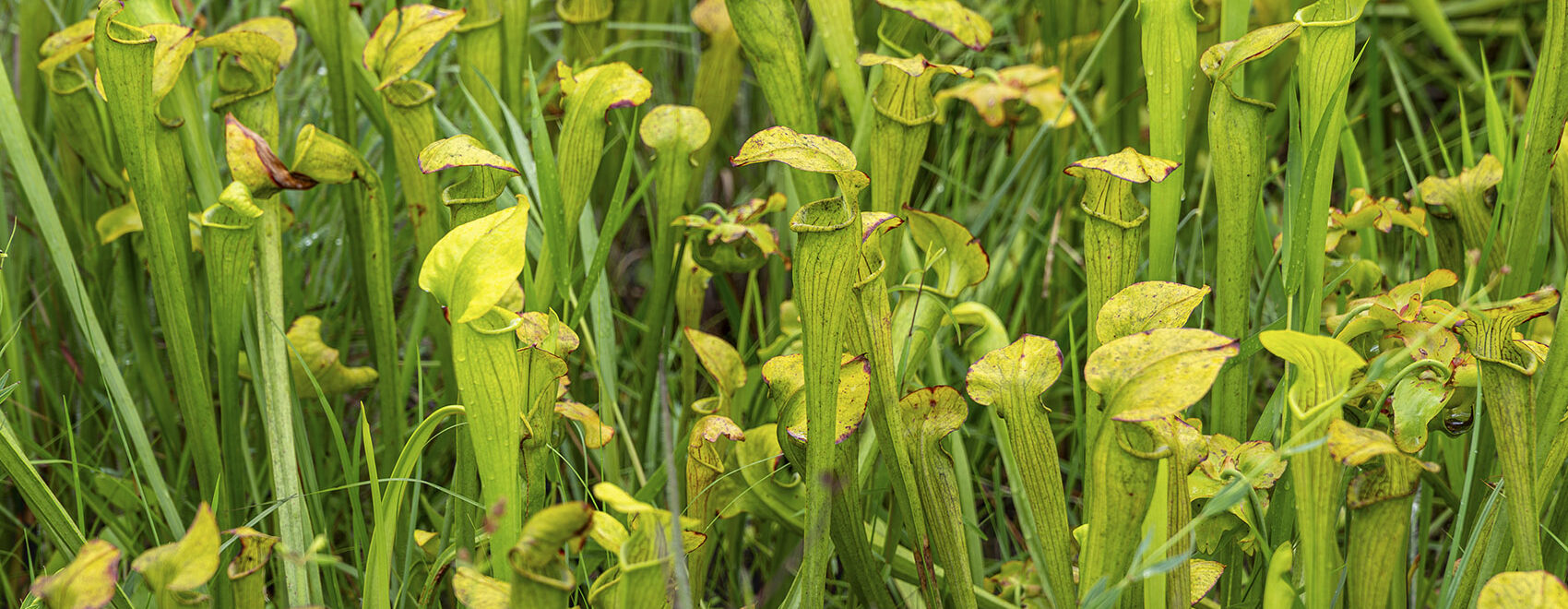
A carnivorous plant, known as the pitcher plant, thrives in the piney woods of Louisiana’s Kisatchie National Forest near Pitkin. Following orange trail markers off Bailey Road leads into a quiet corner of forest where the tall pines carry dark burn marks on their bark. But beyond those charred trunks, the forest floor bursts with color.
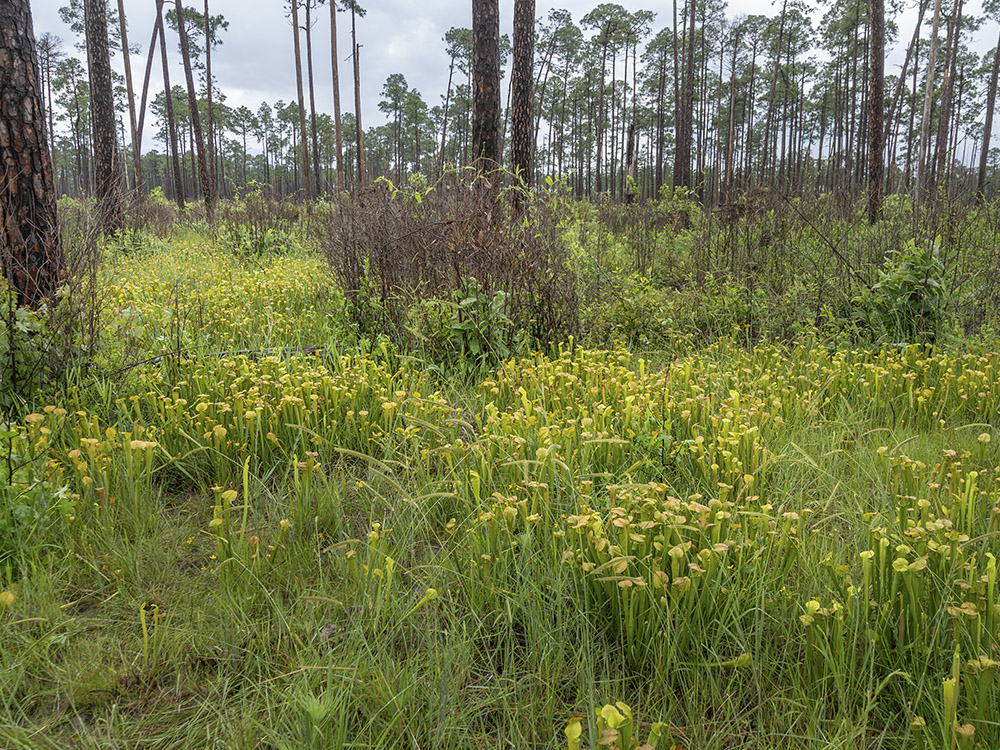
Bright green and yellow pitcher plants fill the open spaces in the pine forest.
Several acres are covered in bright green and yellow pitcher plants, growing in thick clusters in wet, sandy soil. According to U.S. Forest Service biologist Matt Pardue, the timing is no accident. “It’s great. This is right after a fire… when you burn the area, you just see this bright flush of yellow,” he explains.
carnivorous plant thrives in poor soil
This carnivorous plant does something most plants never need to do. It hunts. In this nutrient-poor environment, the pitcher plant has adapted to supplement what the soil cannot provide. “It’s nutrient poor here… so they supplement photosynthesis by absorbing these bugs,” Pardue says.
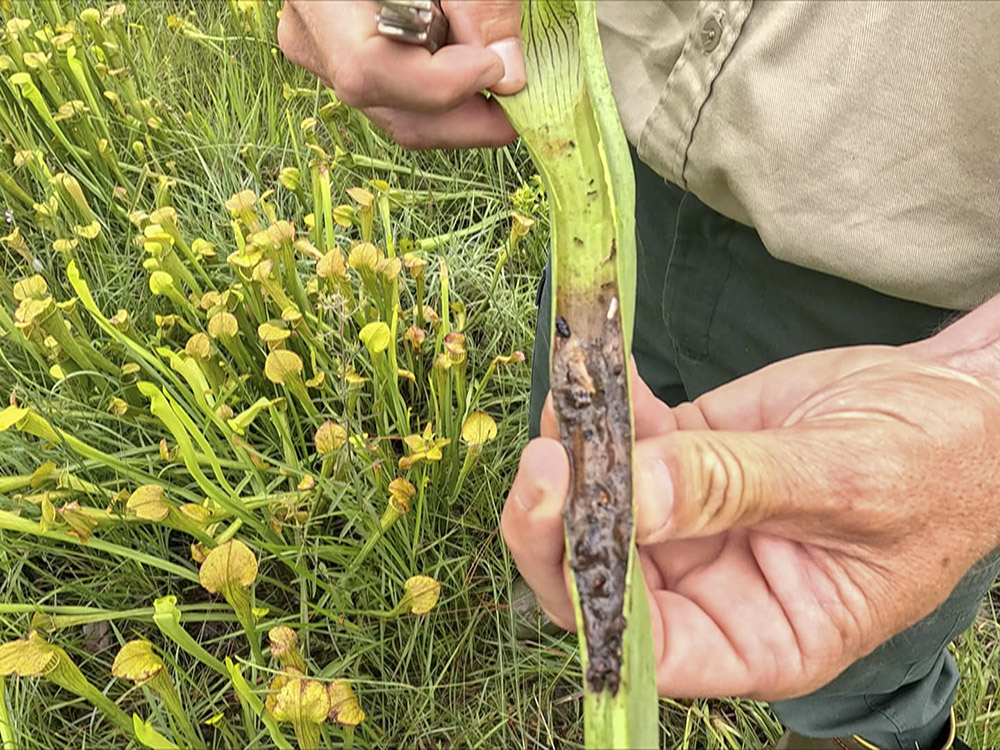
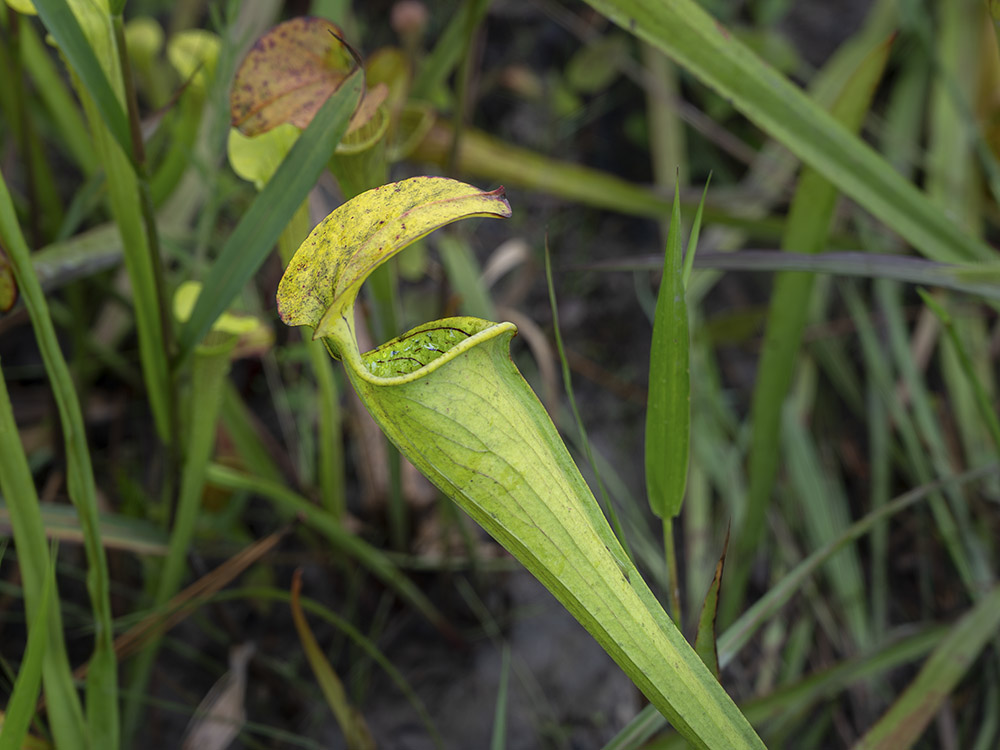
Inside the plant’s long, tubular stem is a carefully designed trap. Insects are lured inside, where tiny downward-pointing hairs make escape nearly impossible. “The bug crawls in here… whenever he tries to come out, he can’t… so he falls into the trap,” Pardue explains.
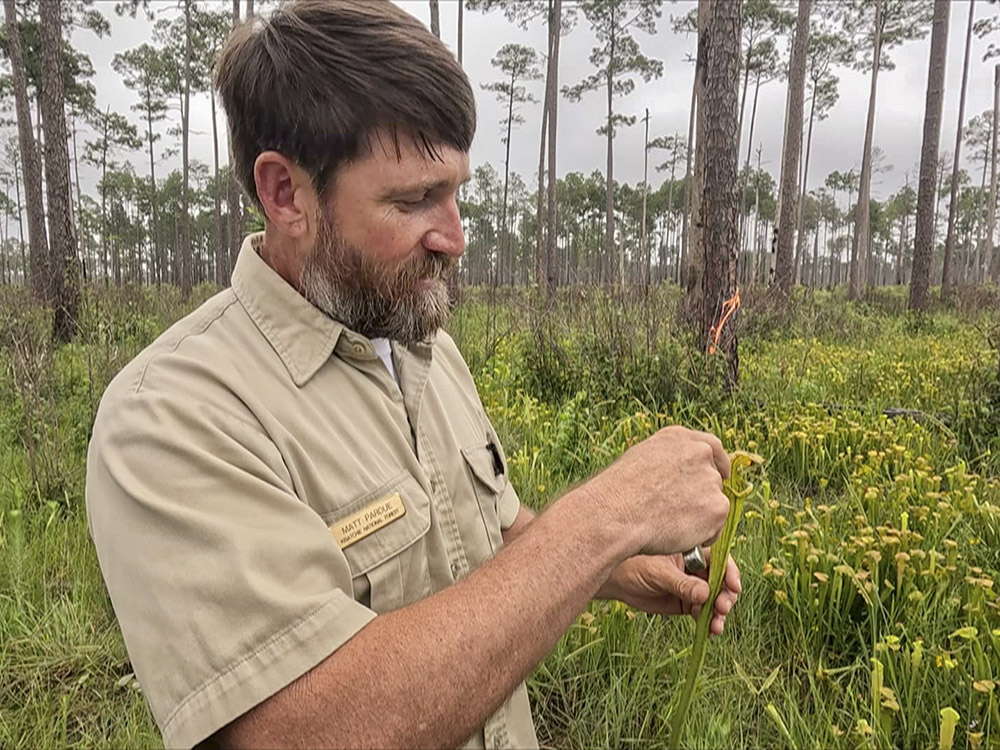
When Pardue slices open one of the plants, the results are unmistakable. “There’s a lot of different insects… love bugs… fire ants… bugs go in there, they die… and they absorb the nutrients.” What appears to be a peaceful garden is, in reality, a survival system built on capturing and digesting insects.
carnivorous plant habitat shaped by fire
The success of the carnivorous pitcher plant depends on fire to play a critical role in maintaining this ecosystem. U.S. Forest Service biologist Jim Caldwell explains the noticeable burn marks on the trunks of trees in the pine forest. “We do a lot of prescribed burning” Caldwell says. “About 125 to 130 thousand acres a year,” of the 600 thousand acre Kisatchie National Forest. He adds, “You open it up so sunlight can come to the forest floor… you get the most beautiful array of plants.”
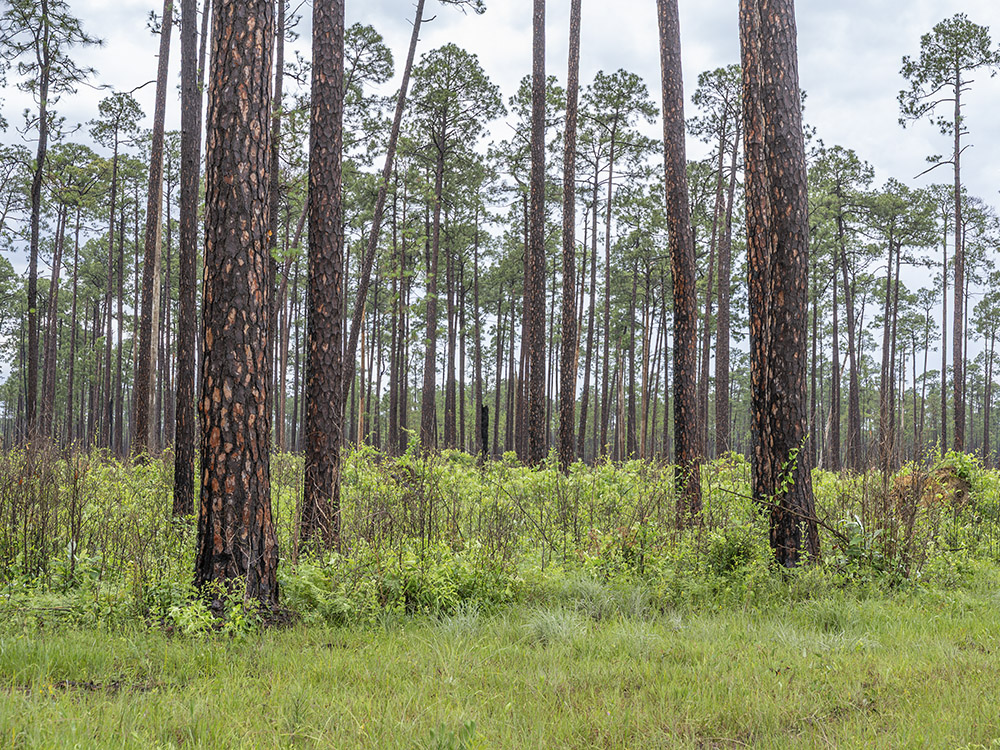
These controlled burns clear thick underbrush and allow sunlight to reach the ground, creating ideal conditions for pitcher plants and other species. Caldwell says the process mirrors what once happened naturally. “You’re going back to something that happened hundreds, thousands of years ago… natural fires that kept the forest open… and healthy.”
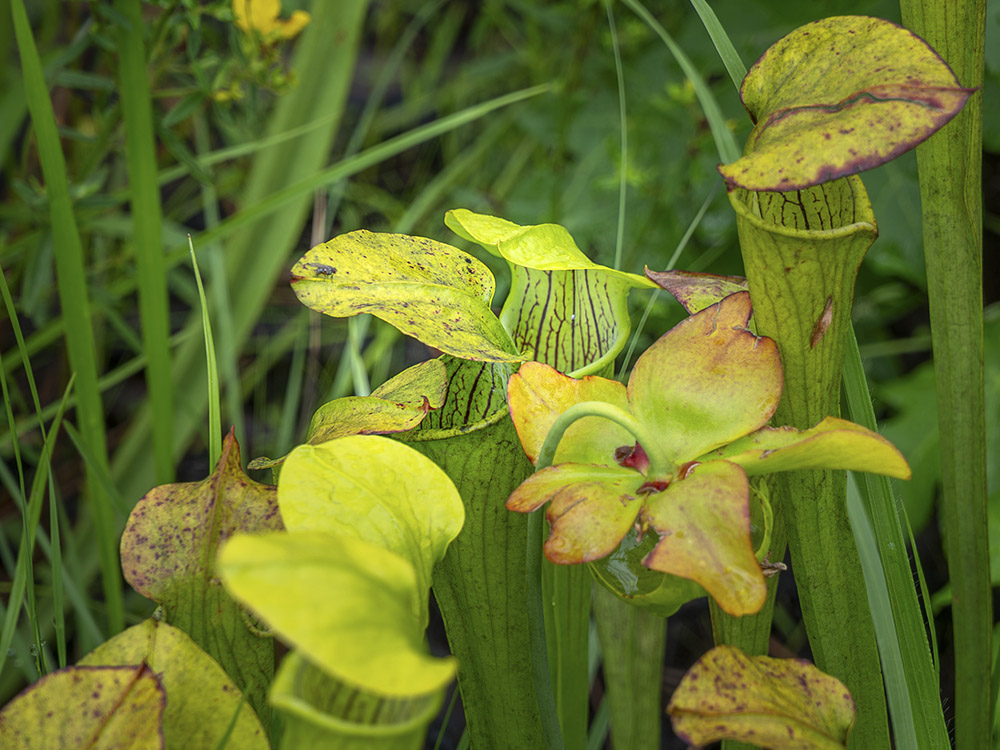
In that balance between fire and regrowth, the pitcher plants flourish. Hidden beneath the grass, even smaller carnivorous plants called sundews trap insects of their own. Together, they form a unique and colorful landscape in the Kisatchie Forest—one that is as beautiful as it is deadly for the insects drawn to these hooded hunters.
pitcher plants featured on tv
getting there
The patches of pitcher plants can be found in numerous sandy bogs located throughout the Kisatchie Forest in Vernon Parish. The bog we visited was located about 100 yards of Bailey Road, a gravel forest service road near La Hwy 10 west of the town of Pitkin. There are faded orange ribbons marking the pathway to the pitcher plant bog.
LA-10 & Bailey Rd, Louisiana 71446
Leave a Reply