

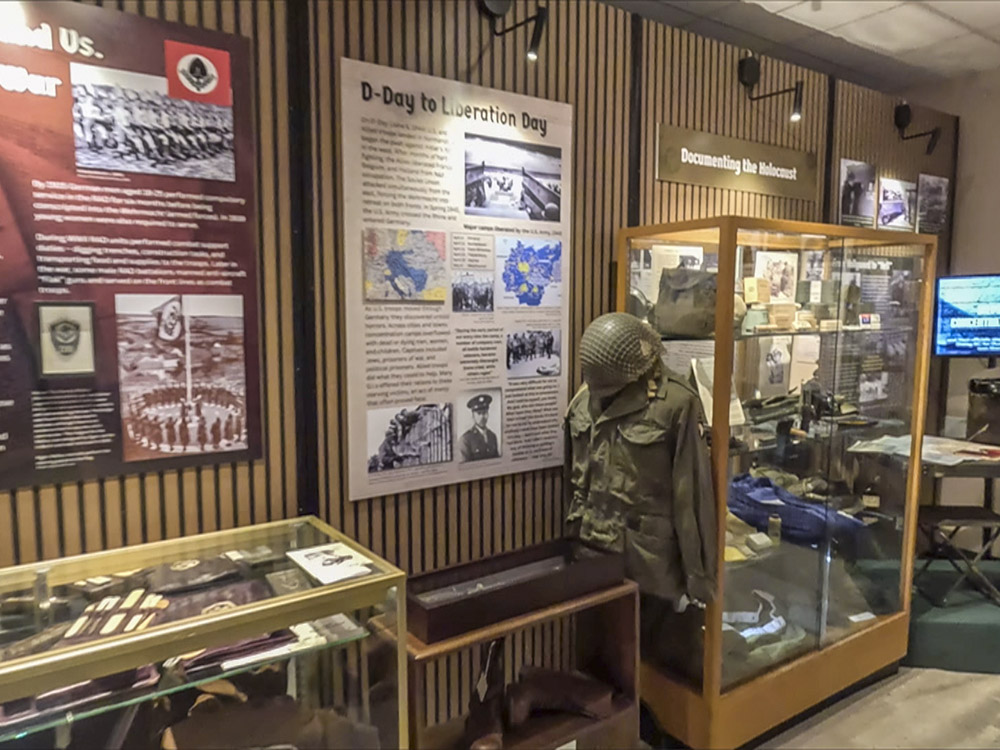
The Nuremberg trials are the focus of a powerful new military history exhibit at Southeastern Louisiana University in Hammond, where more than 120 artifacts trace the story of World War II from the rise of Nazi Germany to the search for justice that followed the war.
a personal collection goes public
The exhibit is built around the 50-year collection of military artifacts assembled by Franklinton collector Al Freyder. His donation includes weapons, uniforms and personal items spanning 200 years of American military history, creating an exhibit that connects visitors with the people behind the artifacts. “I imagine who held this rifle? Who held this pistol? Who wore this uniform? What was their story? And it was always the story that I was interested in,” Freyder said.

For the past decade, Freyder has shared many of the artifacts with Southeastern history students. When he decided to donate his collection, it gave the university the opportunity to create a museum centered on one of history’s defining events.
nuremberg trials – from the rise of nazism to justice
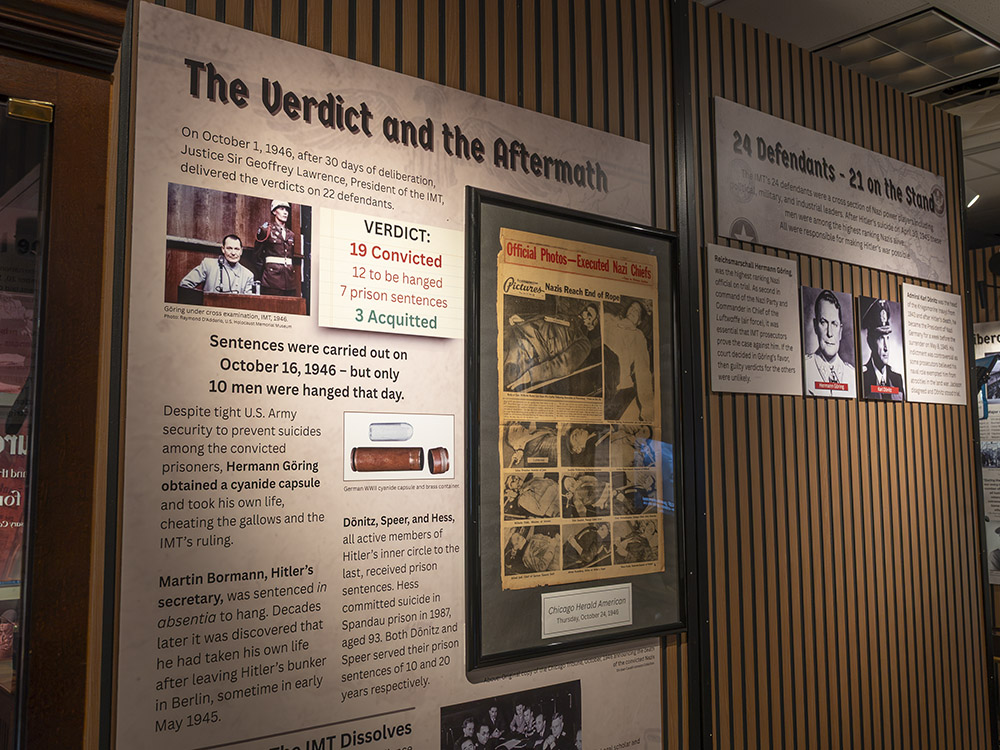
Rather than focusing only on the battlefield, the exhibit follows the broader story of World War II, beginning with the rise of Nazi Germany and ending with the legal reckoning that followed the war. “It begins with the start of the war, how we get into this war, at least in the European Theater. And then it ends with discussing Nuremberg and the outcomes of the Nuremberg trials. This search for justice,” said Dr. Sam Cavell, Southeastern history professor.
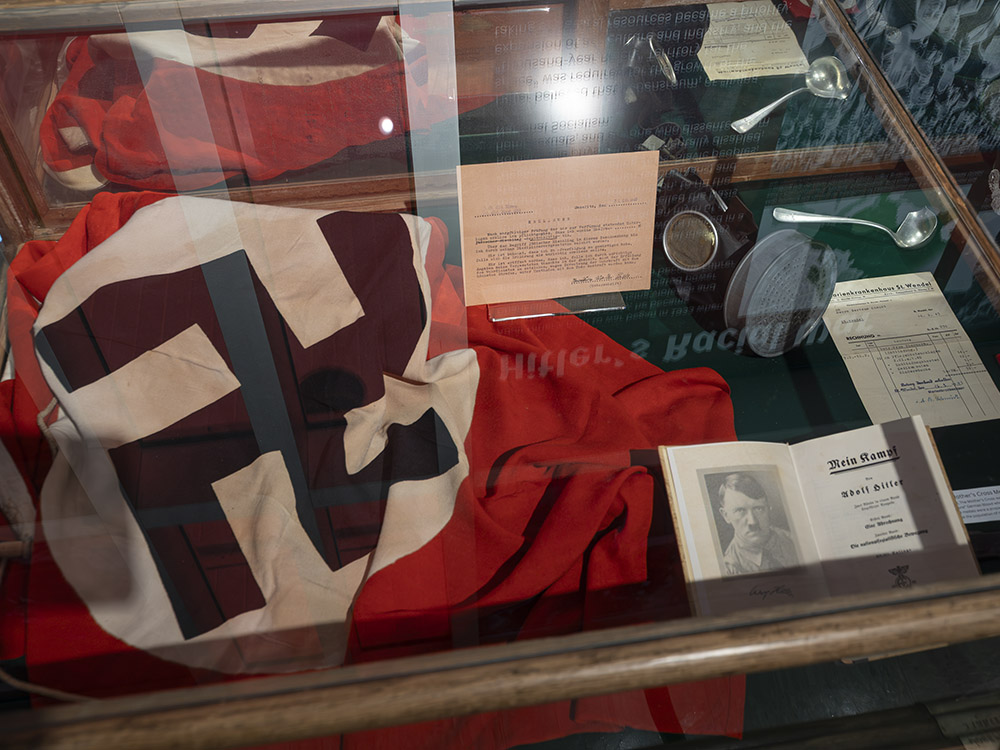
Opening during the 80th anniversary of the Nuremberg trials, the museum includes documents from Nazi Germany, stories of Allied liberation, and footage recorded by American military photographers inside concentration camps. That film was later presented as evidence during the trials.
why the nuremberg trials still matter
The exhibit also confronts visitors with the documented evidence of the Holocaust and explains why preserving that record remains important today. “We’re facing a time in which Holocaust denial has never been greater in this country, particularly among young people. And so seeing this kind of evidence right in front of your face, I think is a really important aspect of the overall story,” Cavell said.
a louisiana connection
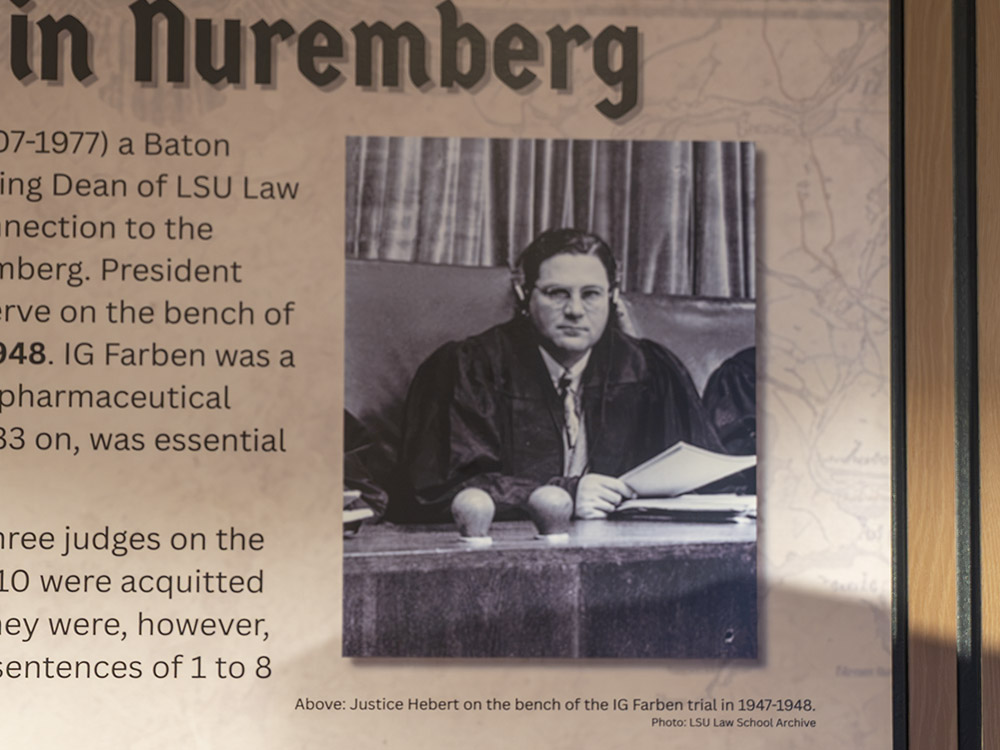
The museum also highlights Louisiana’s connection to the international pursuit of justice. Paul Hebert, then dean of the LSU Law School, served as a justice during one of the Nuremberg trials, and his role is featured as part of the exhibit. The museum will also be showing the black robe that Hebert wore during the trial. Through authentic artifacts, documentary film and personal stories, the exhibit examines not only the horrors of war, but also the lasting importance of justice and historical truth established through the Nuremberg trials.
new military exhibit featured on tv
plan your visit
The Military History Museum is located on the second floor of Fayard Hall, Room 223, on the Southeastern Louisiana University Campus, 1205 N. Oak Street, Hammond, LA. The exhibit will be open 10AM – 3PM Mondays through Thursdays starting August 26, 2026, through the first week of December. The exhibit will be open again for the Spring semester mid-January through mid-May.


Leave a Reply